This Arizona nurse quit her work to manage a laundry full time, which now generates $475,000 annually. This is how she accomplished it
 ahamedabubakkar35@gmail.com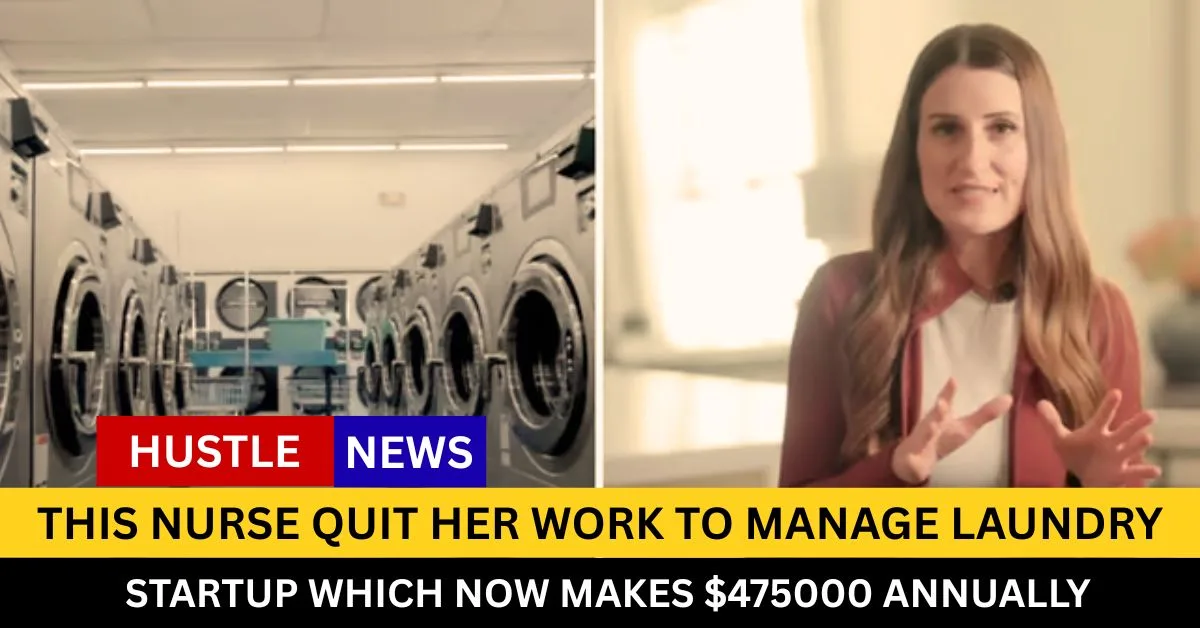
This Arizona nurse quit her work to manage a laundry full time. CREDIT: CNBCMakeIt
Learn How This Arizona nurse quit her work to manage a laundry full time, A former nurse from Arizona is now the proud owner of a laundromat with a much better work-life balance. For the first time, I can spend all of the holidays at home and take every weekend off,” she said to Indifact News (1). “I never need to go to a manager or boss in order to take a spontaneous trip home or anything like that. My freedom of time has therefore entirely changed.
- An Arizona-based nurse left her healthcare job to run a laundromat full time, seeking better work-life balance and independence.
- The laundry business now generates around $475,000 in annual revenue, turning into a profitable and stable venture.
- The career shift gave her complete time freedom, allowing weekends off, holidays at home, and a stress-free lifestyle.
The 38 year-old Cami’s laundromat Story
After deducting expenses, the 38-year-old Cami’s laundromat, which employs six people, generated $475,000 in sales in 2024, or about $120,000 in profit. She is expected to make $451,000 this year.
In order to assist pay for her building rental expenses, she also uses nearby business opportunities to sublease the space next door to a hair salon, earning about $30,000.
Furthermore, as she has pointed out, it goes beyond the financial prospects. It also involves changing one’s way of life. In addition to spending roughly ten hours a week producing social media material about her company, which brings in extra money from views and brand collaborations, she estimates that she spends five or six hours a week managing the firm. By the end of this year, she expects to make roughly $200,000 from this source of income alone.
Cami grants herself a salary of $66,000, saying that instead of attempting to make a career out of what you love, you can utilize your money to pursue your passions outside of work. She now prioritizes spending time with her loved ones during her free time.
Do you want to start your own business? Here’s what you should know about launching a small business, the financial dangers involved, and some advice on how to safeguard your cash when you decide to work for yourself.

What it takes to succeed as an entrepreneur
Although Cami is now thinking about retiring in a few years or starting a second laundromat, she warns that her success wasn’t achieved overnight and that many hours were spent growing the company to its current level, expanding the business model, and reinvesting in improvements and renovations.
I only work five or six hours a week these days. However, since it was not the case five, four, or three years ago, I am likewise reluctant to tell people that. I was putting in a lot more hours in an effort to expand this company.
For instance, from October 2020 to April 2023, she worked almost full-time hours as a nurse and managed the laundromat concurrently. She was able to make enough money from the laundromat to both gradually reduce her nursing hours and quit her employment altogether.
In order to finance the $300,000 down payment for her business, she also sold her house in April 2020 and moved into a rental. She used a sizable portion of her own savings and took out loans for items like new washing machines and other equipment.
Given that the majority of small enterprises are destined to fail within five years, this is a significant risk for an entrepreneur. Actually, between 20 and 24 percent of new enterprises fail within the first year, according to data from the Bureau of Labor Statistics. Just 34.7% of companies are still operating ten years later (2).
Additionally, the average cost of operating a business is high. In their first year of operation, small business entrepreneurs should budget an average of $40,000 for a retail business, according to America’s Small Business Network (3). If you need to recruit staff and have a physical site, these expenses might soar. You can estimate your start-up costs using a calculator provided by the U.S. Small Business Administration (4).
Despite these obstacles, many Americans have become entrepreneurs, with an estimated 27% having a side business (5).
Cami was fortunate to take over a well-known company with a 20-year track record. It might not be as simple (or profitable) for other business owners to start from scratch. For instance, uneven cash flow, a lack of finance or outside investment, and over-leveraging the company by attempting to grow too quickly are some of the biggest financial issues (6).
Financial factors for independent business owners
In an interview with the Wall Street Journal, Danna Greenberg, a professor of organizational behavior at Babson College, stated, “No parent wants to hear that their child isn’t beautiful and no entrepreneur wants to hear that the opportunity isn’t perfect” (6).
To succeed as an entrepreneur, though, you must test and comprehend the market, which includes conducting extensive research to determine the viability of your venture.
After speaking with the uncle of a friend who owned two laundromats, Cami was given the opportunity to discuss the figures with him. She was particularly affected by something he said: “You know, if I could go back in time, I would never go to college, I would never get my master’s degree.” “All I would do is buy laundromats because laundromats scream money,” he says.
In addition to being aware of the legal and tax ramifications of running a business, entrepreneurs should consider incorporating their company to limit their liability by separating their assets from their personal assets. They should also develop an insurance plan to further safeguard their assets in the event of a lawsuit, an accident, or unforeseen losses (7).
Additionally, entrepreneurs should devote their time to making their company future-proof. Cami claims to study books, listen to business podcasts, and go to “at least one or two laundromat conferences a year.” In April 2023, she also managed to purchase a new home for herself.
About The Author