This couple left their lucrative IT jobs in India Bengaluru to cultivate reasonably priced organic food on their Kanpur ancestral land
 ahamedabubakkar35@gmail.com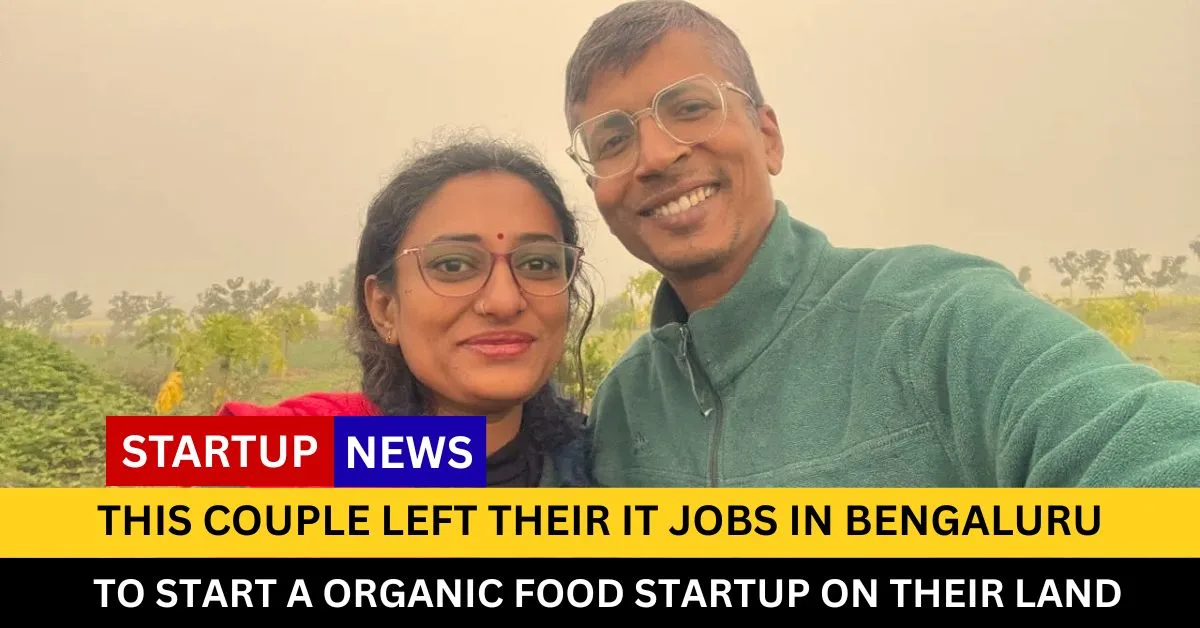
This couple left their lucrative IT jobs in India Bengaluru to cultivate reasonably priced organic food on their Kanpur ancestral land. CREDIT: Tuhi Farms Founders
Learn how This couple left their lucrative IT jobs in India Bengaluru to cultivate reasonably priced organic food on their Kanpur ancestral land at Tuhi Farms, demonstrating that organic food is both accessible and reasonably priced. Eating organic food is become more than simply a way of life. It is gradually becoming essential because to the increasing pollution in our food, water, and air. Although organic products are available in today’s metropolitan areas, most consumers find them to be prohibitively expensive.
- A Bengaluru-based IT couple quit their high-paying corporate jobs to return to their ancestral land in Kanpur and pursue organic farming.
- They founded Tuhi Farms to grow reasonably priced organic food, challenging the belief that organic produce must be expensive.
- Their journey highlights a growing movement toward sustainable living and conscious food choices amid rising pollution and health concerns.
Tuhi Farms can help with that
Ankur and Rashmi Sachan left Bengaluru four years ago and came back to Kanpur with a straightforward plan: cultivate organic fruits and vegetables without the use of chemicals at costs that people could truly afford.
Fresh organic vegetables is delivered straight to your home by Tuhi Farms for 20–30% less than market prices much less than traditional organic brands. Their low-cost organic farming concept is currently reaching consumers in several cities, demonstrating that sustainable organic agriculture doesn’t have to break the bank.

About the Background of the Founders
Both Mr. Ankur and Mrs. Rashmi Sachan have backgrounds in engineering. Ankur graduated from NIT Warangal with a degree in software engineering.
He then worked for firms like IBM, SAP, and Flipkart. In contrast, Rashmi studied mechanical engineering and spent almost ten years working in the oil and gas industry.
When the second wave of COVID-19 struck, they were both settled in Bengaluru and leading secure careers. They made the decision to go back to Kanpur, their hometown, during that period.
The History of Tuhi Farms
Rashmi witnessed the world shutting down around her as a result of COVID when she returned to Kanpur in 2021 on maternity leave. At that point, things started to change. The idea of creating your own ecosystem, or Miyawaki woodlands, was introduced to Rashmi.
She intended to build one on the Kanpur ancestral land of her family. Her father-in-law had suggestions about how to make it happen, but he died before they could begin.
Ankur and Rashmi regarded it as a sign rather than a reason to give up. Perhaps they required their own food, water, and shelter, a place where they could live independently of others, if COVID could shut everything down.
They were both inexperienced farmers. They had no idea where to begin. They studied from farmers, went to workshops, and made blunders for months. Rashmi found that she had an innate talent for cultivating things. Ankur contributed vision and tenacity. Planning took six months. Making a place that could fully support them was the one obvious objective.
“Our goal was to provide a place where people would have somewhere to go in the event that something similar to COVID occurs again. a location with air, clean water, and food of your own. “A place that can support you,” Ankur said in an exclusive interview with Indifact News.
The Model of Agroforestry
The farm is situated on ancestral land that has been in the family for many years in Kanpur’s Chaturi Purwa hamlet. They started working on just 5.5 acres, although owning over 15 acres overall. They were able to explore, learn, and develop gradually without taking on too much risk as a result.
In addition to seasonal crops like wheat, turmeric, and mustard, they first planted papaya, guava, mango, amla, pomegranate, and mosambi. They planted more than 500 trees in the first year, blending forest trees with fruit-bearing species. There are currently between thirty and thirty-five different types of trees on the farm, ten to fifteen of which bear fruit.
Production varies with crop and is still in its infancy. They extracted about 20 quintals of raw turmeric from half an acre; after processing, that amount dropped to about 3.3 quintals. They harvested about 7.7 quintals from 1.5 acres of mustard.
Large-scale monocropping was never the aim. Rather, they desired diversity the kind that promotes long-term sustainability and soil health. They made the decision to cultivate the food that fed them as kids. Every choice made on the farm is still guided by that mindset.
The First Difficulties
The earth itself presented the first significant obstacle. The amount of organic carbon was only 0.3%, significantly less than the 1% required for a crop to develop healthily.
They added vermicompost, cow dung manure, neem cake, mustard cake, and red soil that was high in iron and nutrients to enhance the health of the soil. Before planting, ten kilograms of this meticulously prepared mixture were added to each pit. Everything had to be done by hand because they decided not to use chemicals. Time and physical effort were required for plant maintenance, weeding, and soil care.
They also had trouble gaining access to markets and building confidence. They had no clients at first. They gave their relatives and family whatever little they sold. Expenses continued to mount despite the lack of revenue. Many people advise us to take shortcuts or utilize chemicals, but we are unable to do so. Trust is irreversibly lost once it is lost. Ankur told Indifact News.
It takes time to establish confidence. People were hesitant if they didn’t have certifications. They therefore put a strong emphasis on openness, inviting people to observe the process and demonstrating how their food was grown. Nowadays, over 99 percent of seeds are hybrid. It’s really hard to find Desi seeds,” Rashmi told Indifact News.
Additionally, they deliberately decided to maintain reasonable rates. While many organic brands charge double or even treble what they do, their products are just 20–30% more expensive than the going rate. Profit maximization was never the goal. The goal was to increase access to clean food.
Investment, Development, and Supply Chain
The owners of Tuhi Farms first invested about Rs. 5 lakh in basic infrastructure, fencing, and saplings. They now get between 200 and 300 orders a month. Their yearly turnover is approximately Rs. 4–5 lakh, with an average monthly revenue of between Rs. 40,000 and Rs. 50,000.
Products are typically delivered straight to customers after orders are placed via a WhatsApp group. While some products are treated internally, others are sold raw. Before being sold, mustard, for instance, is pressed into oil. The farm owners utilize logistical partners to distribute to far-off cities, but also supply themselves to local communities.
Ankur frequently makes the delivery himself for the surrounding Kanpur areas. They are able to maintain great quality and fair costs thanks to this direct-to-consumer business approach.
The Farm-to-Fork Model: What Is It?
The farm-to-fork approach, which involves growing, processing, and delivering food straight from the farm to the customer’s plate, is one of the most intriguing aspects of their operations. “Know Your Source of Food” is our tagline. You must be aware of the precise origins, growers, and methods of your food. Before they consume, we want every customer to be aware of it. Rashmi told Indifact News.
Ankur claims that the majority of agricultural farms are divided into three distinct responsibilities. The guy who cultivates the crop is one of them. Then there’s another person who does the processing, like turning mustard into oil. Lastly, it is sold and marketed by someone else.
Everyone receives a portion. In the end, the farmer receives less money and the customer pays more. Ankur and Rashmi handle all three on their own. They cultivate and gather. They transform the unprocessed produce into final goods. They personally distribute it and promote it via their WhatsApp group. The client receives fresher, more affordable food because they do everything they can to keep costs low and quality high.
Considering the Future
The proprietors of Tuhi Farms are considering options outside WhatsApp. A website is being developed, and discussions with individuals who have their own apps to sell goods on marketplaces are continuing.
The farm will require those platforms as their clientele expands and more individuals become aware of them. Right now, Ankur is just concerned with ensuring that they have enough inventory to complete each and every request.
I believe we can scale in a year or two if we don’t change. But first, we must master the fundamentals. Availability is the most crucial factor in every business. Customers must receive what they ordered when they place an order with us. Ankur says.
They are currently concentrating on three goals: growing their clientele outside of Kanpur, improving their internet presence via the website, and increasing production on their existing 5.5 acres.
About The Author


