Anyone can launch an online store with a 3D printer and a few hundred dollars, according to a teenage entrepreneur who makes six figures in sales.
 ahamedabubakkar35@gmail.com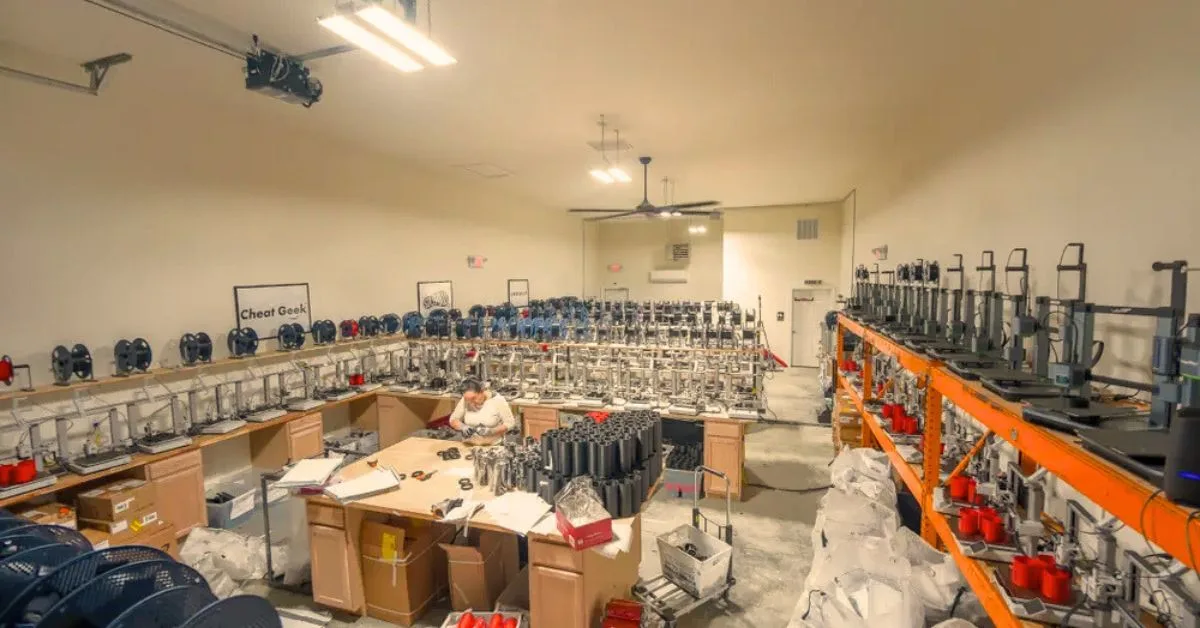
Anyone can launch an online store with a 3D printer and a few hundred dollars.
Anyone can launch an online store with a 3D printer and a few hundred dollars. Michael Satterlee has extensive experience starting enterprises on a tight budget. He launched his first online business while still in middle school, selling a sand repellant product he made with cornstarch and hand sanitizer.
The 18-year-old business owner told Indifact News, “I didn’t have any money at the time, so I used a free app like Google Sites instead of Shopify and for my checkout, I had an Amazon Handmade account,” referring to Amazon’s marketplace for handcrafted goods that waives the monthly selling fee for authorized makers.
Also read: Which of The 7 Ingenious Side Hustles We Found in 2025 Will Pay Off in 2026?
I had a free Google Sites account, a free Amazon account, and a link to my Amazon store as my “buy button.” I began selling in this manner.
His next business endeavor, a clog accessory firm called Solefully, was financed by his sand repellant company. Cruise Cup, his homerun business, sells a range of goods, including his viral “tactical reload can holder.” Indifact News examined a screenshot of Satterlee’s Shopify dashboard to confirm that he made $300,000 in sales in November 2025 alone.
The teenager, who is skipping college to scale Cruise Cup and still resides in his childhood home outside of Albany, New York, described how to begin selling goods online with a few hundred dollars.
1. Use a 3D printer to begin prototyping: Working with a supplier to bring a product to life is a crucial part of starting an e-commerce business. This process can be costly because there is usually a minimum order quantity and time-consuming, particularly if the manufacturer is located abroad.
Satterlee used a 3D printer to make things as a workaround. In a class he took during his first year of high school, he learnt about 3D printing and CAD (computer-aided design) modeling. He is convinced that anyone could begin developing and testing items with one.
“A roll of filament costs about $20, and a 3D printer may be purchased for about $100. These days, modeling software is quite simple; you can even use AI to create a model that is ready for 3D printing by simply typing in a prompt.
He stated, “As soon as I come up with the idea, I get the CAD, and I start working on it, and it’s pretty rare that I nail something first try.” It will require some fine-tuning until you have a product that you are happy with.
However, he can work much more quickly than if he were exchanging samples with a company. The initial iteration of his viral can holder took roughly three days to prototype, and it took a week to list the product.
I would say that I was able to get the product up within a week after working with a few folks to get the website’s photos up and some animations to make it seem really great.
2. Test several product concepts: Instead of spending months trying to perfect a product, Satterlee thinks it’s better to create it quickly and iterate from there. One of the main benefits of using a 3D printer is that you may produce goods in a matter of days at a cheap cost, test the market, and then decide whether to spend time, money, and resources on large-scale production.
came about solely after he experimented with a number of products on Etsy before one a snowplow attachment for clogs took off. He made the decision to create a whole store focused on clog accessories after realizing the need.
“Just make whatever idea you have exist first, and then make it good later,” he stated. “People would frequently ask me, ‘If a can cooler is 3D printed, what’s the point? It is not insulated. The drink won’t stay cold with it. I didn’t care, though. The vision came to me. If you have an idea, just make it a reality as quickly as you can, then move on.”
3. Make use of free and inexpensive resources: “A lot of the startup costs are free,” according to Satterlee, in the e-commerce industry. You may begin producing and sharing material on social media for free once you have the necessary tools, such as a printer and filament.
“Instagram and TikTok are the biggest things when you’re starting out because you want to get a following and you want to get organic sales and organic traffic,” he stated. He concentrated on producing viral content instead than purchasing advertisements.
Regarding your selling platform, “Shopify is $1 a month for your first three months, and then after that it’s $35 a month.” You might also have to pay for a label printer to create mailing labels and bubble envelopes to ship your orders.
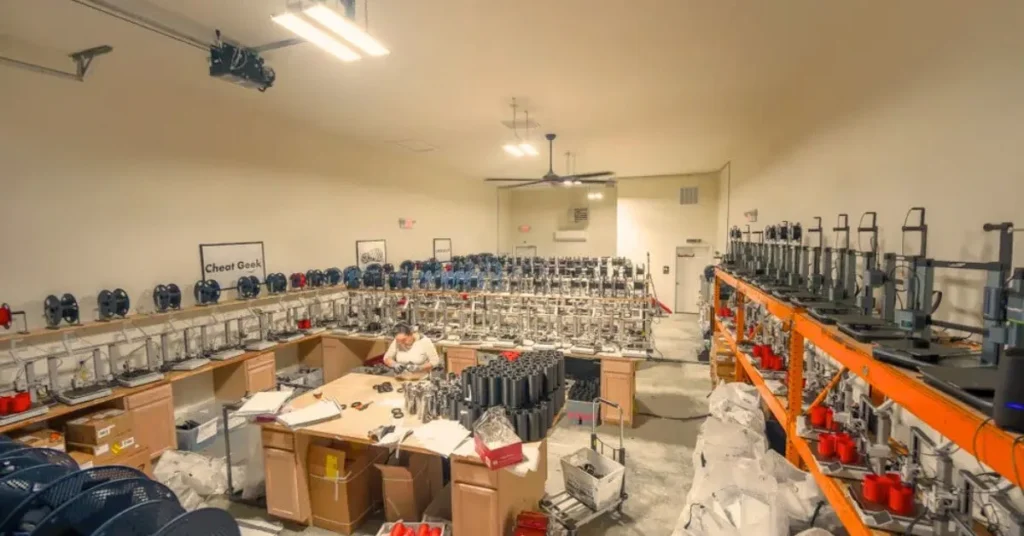
Satterlee now operates out of a nearby warehouse that he leases after outgrowing his initial office location, which was his childhood home. Although he has over 130 3D printers operating nonstop to create Cruise Cup merchandise, it is insufficient to meet demand. His next move is to work with a manufacturer to set up a mold, which will ultimately save him time and money but will cost between $20,000 and $30,000.
“The final product in my mind is when I have it manufactured in stainless steel,” he stated.
About The Author