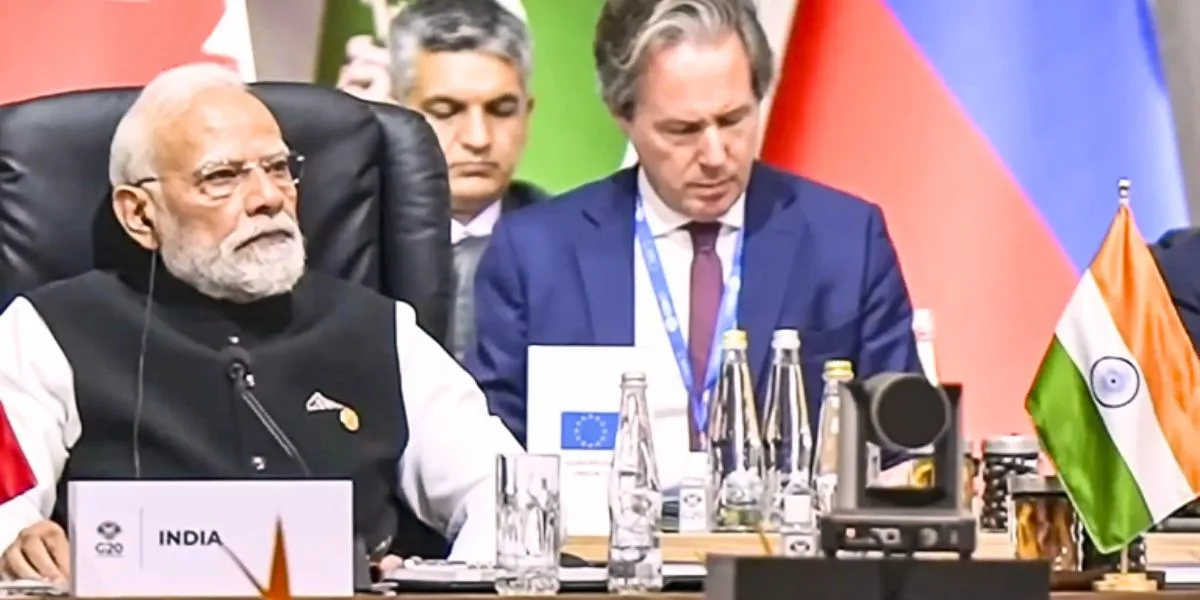
NEW DELHI: Highlights of PM Modi praises the G20 Summit visit to Johannesburg were shared on Sunday, and he called his conversations and interactions with world leaders “productive.”
“Yesterday’s proceedings at the G20 Summit in Johannesburg were fruitful,” PM Modi said on X. I participated in two sessions and expressed my opinions on important topics. had fruitful meetings with numerous foreign leaders as well. Watch the highlights.
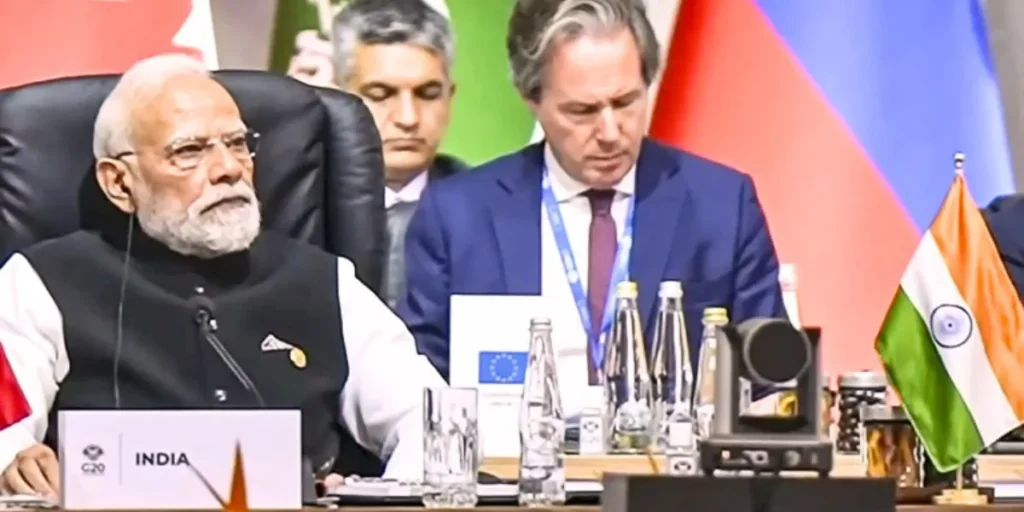
PM Modi advocated for inclusive and sustainable global development during his summit speech. According to him, the current growth criteria have caused overexploitation of environment and resource deprivation in many parts of the world.
Also Read | G20 summit: PM Modi calls for global fight against drug-terror nexus
PM Modi emphasized the necessity of implementing “integral humanism,” a development strategy that sees people, society, and the natural world as a single, cohesive whole.
A concerted international effort to break the link between drugs and terrorism was one of the prime minister’s four main recommendations. He called drug trafficking a threat to public health, security, and a source of funding for terrorism, and he called on the G20 countries to bolster financial, governance, and security tools to combat the escalating threat.
PM Modi suggested a “G20–Africa Skills Multiplier Initiative” to empower young talent throughout the continent utilizing a “train-the-trainer” methodology, with an emphasis on Africa’s growth. Over the course of the next ten years, the program seeks to train one million certified trainers in order to increase local capacity and employment growth.
In order to conserve indigenous wisdom for future generations, he also advocated for the establishment of an international repository of traditional knowledge. In order to guarantee prompt action during pandemics and natural disasters, the prime minister also recommended creating a global health response team.
PM Modi emphasized the need for greater international cooperation and brought attention to the rising frequency of natural disasters during the summit’s second session. He praised South Africa’s attention to the matter this year and emphasized that India established the Disaster Risk Reduction Working Group during its 2023 G20 leadership.
He suggested a change from a “response-centric” to a “development-centric” approach to resilience, stating that in order to create a safe global system, efforts must connect public health, nutrition, sustainable agriculture, and disaster preparedness.
The Prime Minister introduced the “G20 Critical Minerals Circularity Initiative,” with an emphasis on energy transition and climate action. Innovations like recycling, urban mining, and second-life batteries, he claimed, can ease supply chain pressure and help achieve clean energy objectives.
PM Modi suggested a “G20 Open Satellite Data Partnership,” which would make satellite data from member countries more accessible for agriculture, fisheries, and disaster management, especially in the Global South, in an effort to promote space technology for development.
Citing domestic accomplishments like the largest food and health security programs in the world and India’s global campaign to promote millets, he also reiterated India’s commitment to climate action and food security.
PM Modi praised South Africa’s leadership for addressing important problems like women’s empowerment, food security, AI, skilled migration, and the digital economy. Additionally, he emphasized the significance of providing the Global South a more powerful voice in global governance and claimed that the African Union’s admission to the G20 was a significant step in that direction.
PM Modi also met French President Emmanuel Macron, Brazilian President Lula da Silva, Italian Prime Minister Giorgia Meloni, and Malaysian Prime Minister Anwar Ibrahim on the fringes of the conference.
The G20 was held on the African continent for the first time at this year’s conference. The last three presidents have been from the Global South: Brazil, Indonesia, and India.
Following his previous engagements for the BRICS Summits in 2018 and 2023 as well as a bilateral visit in 2016, this is PM Modi’s fourth official visit to South Africa, highlighting the strengthening ties between the two countries.
Read more from The Times of India on their site