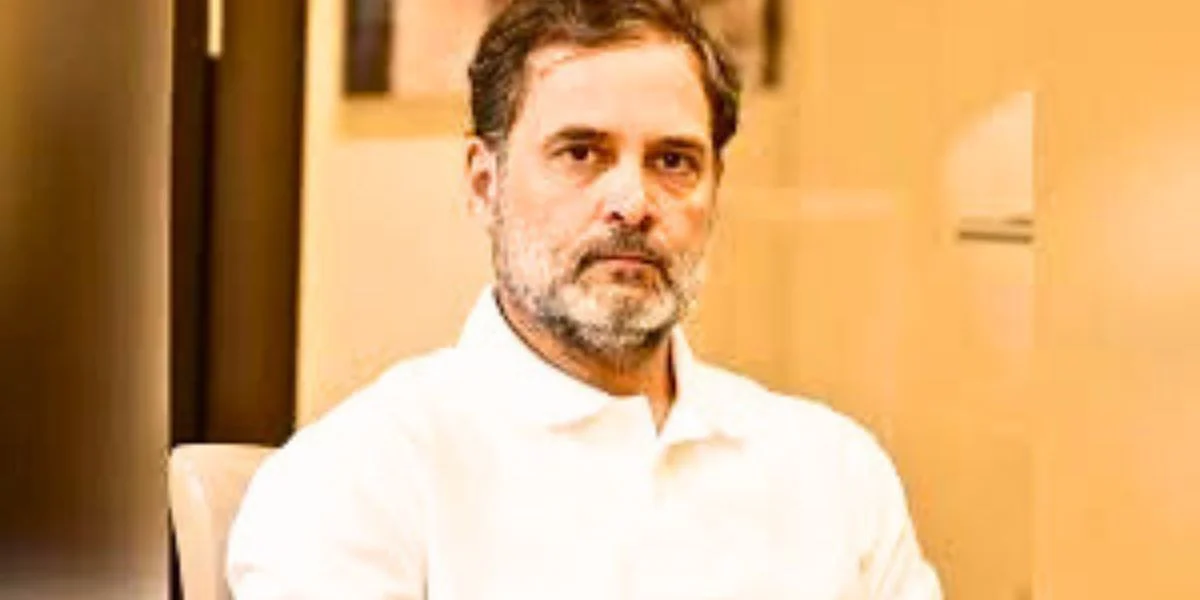
Rahul Gandhi’s long game election defeats are one thing, but there are also carefully planned defeats of the quiet, clandestine variety, in which the architect leaves humming. Modi, the ECI, or voter fatigue did not cause Bihar’s Mahagathbandhan to fall. The Congress handled the partnership more like a property dispute than a coalition, which is why it fell apart. Sharing seats turned into a trench fight. The announcement of candidates came after the campaign had already collapsed. Smaller parties didn’t feel courted, but rather harried. What appeared to be pandemonium was actually choreography.
Beneath the mishandling is the political reality that no one in Lutyens wants to publicly state: Rahul Gandhi faces a long-term threat from any young national-level challenger in the North, be it Tejashwi in Bihar, Akhilesh in Uttar Pradesh, or even a rising star in Gujarat. Rahul’s indispensability can only be maintained by making sure these regional leaders are never tall enough to meet his gaze. Rahul doesn’t worry about non-North leaders like Uddhav Thackeray in Maharashtra, Dayanidhi Maran in Tamil Nadu, and Abhishek Banerjee in Bengal. Yes, they are charismatic. Some are descended from powerful dynasties like his. However, they are not national contenders; rather, they are regional royalty. The belt that defines Delhi is the geography he desires, and they pose no threat to it. The fact that their ceiling is included into the layout of their home makes them safer allies.
His odd campaign messaging in Bihar is set against this context. Rahul selected “vote chori,” an accusation so nebulous that it cannot be confirmed or refuted, in the face of pressing concerns like employment, immigration, and governance. A catchphrase intended to stifle any competing narrative rather than inspire the public. A weak plank selected not by accident but by strategy: no one in the alliance can become its hero if the campaign’s main idea is unable to uplift it. Rahul at work these days is colder and more tactical. His Yatra, a protracted, legendary journey during which he abandoned the Pappu moniker and assumed a new persona that was a combination of austere, influential, and rebellious royal, marked the beginning of his metamorphosis. It dawned on him that he could be both Rahulji and the enduring youth icon. Without the previous rigidity, he could be a Gandhi. Afterwards, the tobogganing with Priyanka was a rebranding that declared, “Only I can be both insider and outsider,” rather than frivolous optics.
This family has a long history of removing competitors. Within the Congress, Indira did it brutally. Sonia accomplished things in a courteous but equally efficient manner. Rahul is unable to replicate their model within the party, which is too weak for a purge. He has thus innovated by doing it outside. Reduce the area surrounding prospective national stars. Don’t give them too much oxygen. Allow them to shine inside their states, but never outside of them. Make friends and uphold the hierarchy.
Take note of the philosophical resonance here: Machiavelli’s long-standing caution that the prince must make sure no rival centers of devotion emerge. Rahul has internalized that adage in the contemporary Indian context rather than the medieval European one. He lost a nation but inherited a party, and now he wants both back not now, not tomorrow, but unavoidably. The paradoxical figure of a man who can lose without breaking, recede without vanishing, and bide his time because he understands that time is his ally is created by this gradual, patient consolidation. When age, weariness, and political overreach catch up to everyone else, he is playing for the moment. And that leads to the most controversial fact of all: consider Rahul Gandhi to be the joke of Indian politics at your own risk. He appears to be its most resilient competitor, the one who outlasts opponents rather than outperforms them.
The underdog who intends to own the yard knows that the last dog standing will become the top dog. This is the true conclusion of Bihar’s story, which no party spokesperson will acknowledge or even admit.
Read more from The New Indian Express on their site