The Spicy Side Business of This Couple Will Soon Reach $15,000 Per Month: “Tiny Things Seem Huge”
 ahamedabubakkar35@gmail.com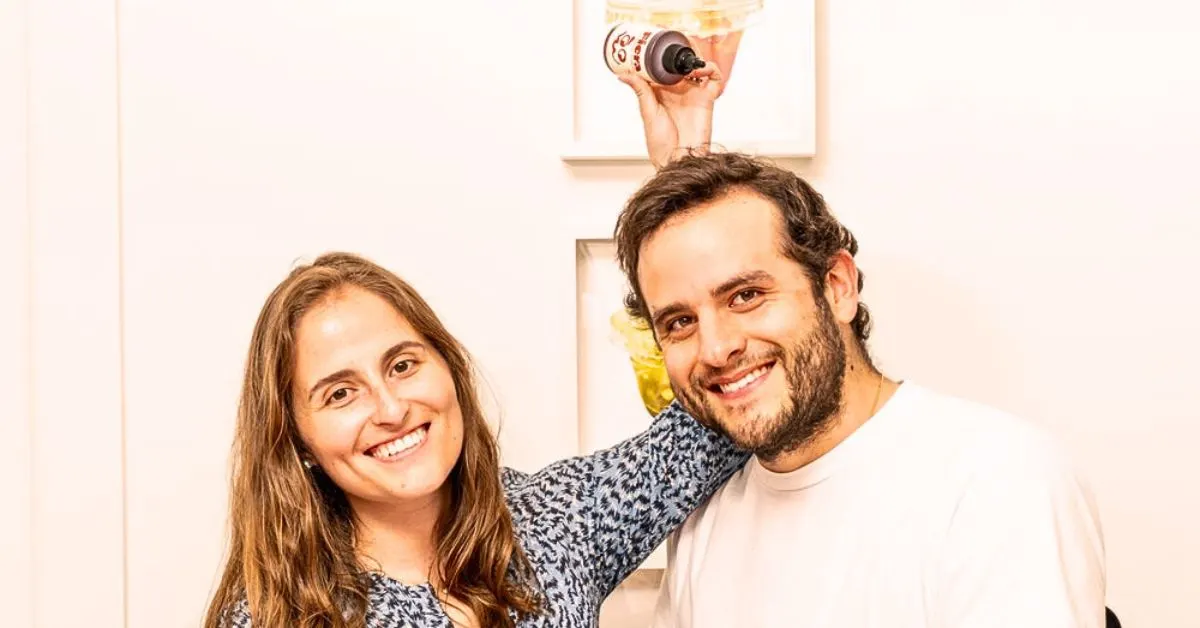
The Spicy Side Business of This Couple Will Soon Reach $15,000 Per Month Tiny Things Seem Huge. Image Credit: Courtesy of Fiera Flavors
Spicy Side Business of This Couple, Mariana Carrizosa and Sebastian Jaramillo, a 32-year-old couple who recently relocated from Bogotá, Colombia to Austin, Texas, are the subject of this Side Hustle Spotlight Q&A. Last year, the couple established their infused olive oil business, Fiera Flavors, as a side gig. The length and clarity of the responses have been altered.
When you began your side business, what was your day job or major occupation?
Mariana: Sebastian was managing his software development company, which he continues to run, while I worked as a consultant at Bain & Company.
Where did you get the idea for your side business and when did you launch it?
Mariana: We had no intention of launching a food brand. It simply kind of occurred. On our first date in 2020, Sebastian really created the initial version for me. It was a component of his recipe for arrabbiatta sauce, and I enjoyed it so much that I brought some home in a plastic bag (my sexiest move!). From there, it developed organically as we continued to try it on various dishes and give it to friends and family. This past May, we sold our first bottle in the United States.
What initial actions did you take to launch your side business? What was the launch cost in terms of money or investment?
Sebastian: Permits and branding were the next significant steps after we realized how popular the product was. Verifying the safety of the recipe and procedure, registering the company, trademarking, and achieving the desired appearance and feel. Since everything had to be started over after moving to the United States, including the name, it ended up costing more than we had anticipated. We discovered that “Bestial,” our original Colombian brand, didn’t translate well to this country. We spent between $15,000 to $20,000 in total on things like branding, legal permits, and consultations with food scientists.
These days, you can actually learn anything on YouTube.
Have you found any resources, either paid or free, that have been particularly useful in launching and operating this business?
Sebastian: Local networking events and YouTube Premium. With the quantity of information people share on YouTube these days, you can actually teach yourself anything. For a few dollars a month, you can learn everything from automating daily routines to setting up your Shopify store. Attending local networking events in your region is another absolutely free option. The generosity of strangers and the desire to support other business owners will astound you.
What procedure or strategy would you alter if you could go back in time to your company journey to save time, effort, or simply a headache? How would you have done it differently?
Mariana: I regret not adopting a more tech-first attitude sooner. In order to gain access to shops, I used to spend hours every day cold contacting them and manually writing follow-ups. We expanded from roughly five locations to over forty in a matter of months once Sebastian noticed this and created a solution for me that automated the entire process. I was also able to regain at least three hours of my day.
What have you discovered to be especially difficult and/or unexpected about this particular business that people who enter this line of work should be ready for but probably aren’t?
Mariana: the absence of limits. Setting and upholding them is your responsibility. There is no company policy or supervisor to ensure that you don’t overwork yourself, sleep poorly, eat poorly, or neglect your loved ones. It’s your responsibility to establish the work-life balance you desire, which can be challenging because every hour you take off from work seems to directly affect your company. It’s challenging to find that balance.
Can you think of a particular situation where something went horribly wrong? How was it fixed?
Sebastian: We initially purchased 10,000 pre-labeled 16-ounce bottles from China since we were so excited. We soon discovered that 16-ounce bottles had lengthy repurchase cycles and were far too large. We ultimately had to give them away because no one wanted pre-labeled packaging, and we had to pay for four months of storage for fifty cartons of bottles. The solution was straightforward: Use generic packaging from a nearby distributor to start small. After your concept has been proven, consider larger orders and custom designs. Although the lesson was costly, we will never forget it. For background. Our current five-ounce bottle lasts roughly two weeks for our best customers and one month for our average consumers. We fell well short of the mark.
How long did it take you to receive steady monthly income? What is the current state of growth and revenue?
It took several months for the U.S. company. To convince consumers to sample your product, fall in love with it, and finally make another buy, you need face-time, repetition, and exposure. To spread the word, we participated in numerous farmers’ markets, store demos, and absurd social media skits.
By hitting over $15,000 in steady monthly sales by the end of the year, we hope to treble revenue the following year.
It is better to do something properly and release it into the world than to hang onto it indefinitely.
What aspects of managing this company do you find most enjoyable?
Mariana: The little triumphs. entering a new store, getting praise for our branding, or getting a five-star review. You often get to experience those little things on a daily basis, and they feel enormous.
What specific, useful business advice would you recommend?
Mariana: In essence, it says that producing something well and releasing it into the world is preferable to holding onto it indefinitely while attempting to make it flawless. This is something I constantly battle with. I detest releasing anything that doesn’t feel completely polished. I’m usually reminded by Sebastian to strive for “less perfect, more done,” and to be honest, it’s the only way to make progress and get rid of that never-ending to-do list.
About The Author