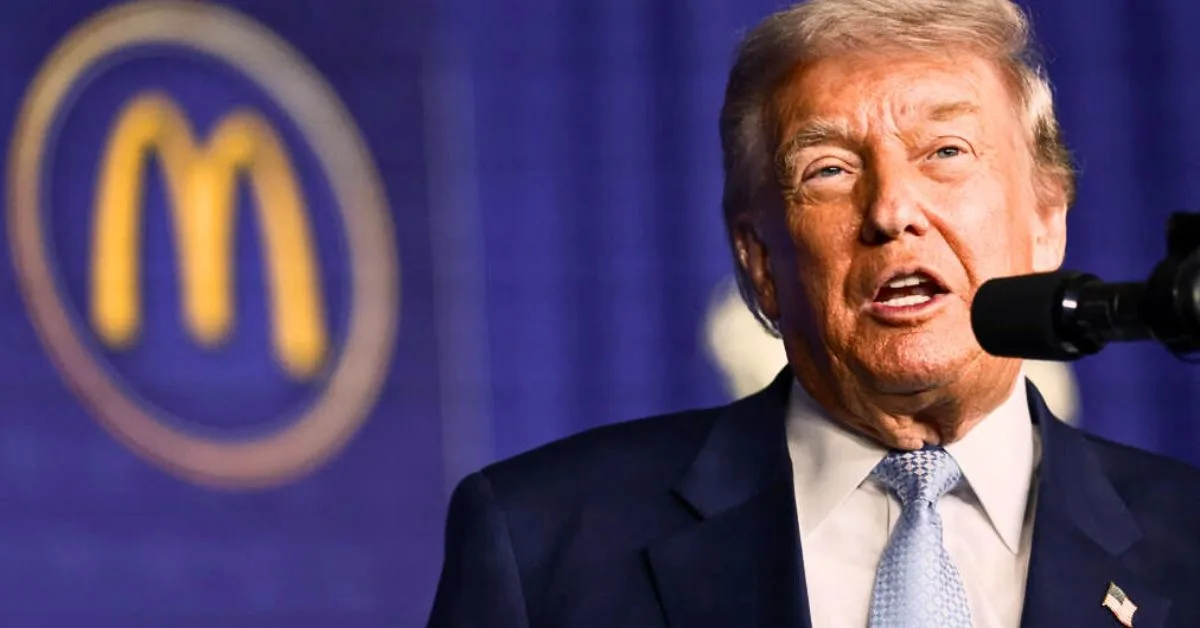
Gavin Newsom, the governor of California, is “laying siege on the minimum wage,” according to President Donald Trump Trump $20 fast-food minimum wage in California. This is probably a reference to the $20 pay floor for fast-food workers in the state. However, studies indicate that extensive closures have not happened and the state’s fast-food worker turnover is declining.
Nevertheless, at a time when other expenses are rising and diners are dining out less frequently, California franchisees’ sales and earnings have suffered.
On Monday, California Governor Gavin Newsom was accused by President Donald Trump of “laying siege on the minimum wage.”
The increased hourly pay floor for fast-food workers in California, which went into effect a year and a half ago, was probably the subject of Trump’s remarks at the McDonald’s Impact Summit. Data thus far, however, suggests the policy hasn’t posed the threat Trump claimed.
The state’s fast-food employee turnover rate is declining, according to research. Restaurant brands are continuously opening outlets in California, and there haven’t been any widespread closures.
Indeed, at a time when other expenses are rising and customers are dining out less frequently, the higher wages have put additional strain on restaurant chains and operators. Additionally, because of the new pay floor, customers are paying extra for their fries, burgers, and chicken tenders.
However, detractors’ biggest predictions have not materialized after a protracted debate about whether rising worker wages would hurt restaurants.
In April 2024, fast-food employees in California who work for chains with more than 60 sites nationwide began receiving $20 per hour, which is 25% more than the state’s general minimum wage of $16. The sectoral pay floor is a component of a broader California law that includes creates a council with the power to raise the hourly minimum wage on an annual basis and recommends industry standards to state agencies.
Only until the restaurant industry and unions reached an agreement that put an end to months of hostilities did fast-food workers get their major break. The legislation was supported by the Service Employees International Union, which said it would enhance workers’ lives and reduce industry turnover. Quick-service restaurants claimed that the wage increase would negatively impact their operations and that they were being unfairly singled out.
“Everyone should have the right to a decent pay, in my opinion. Kerri Harper-Howie, who manages WEH Organization and its 25 McDonald’s restaurants in Los Angeles County alongside her sister Nicole Harper-Rawlins, stated, “The problem that I and my colleagues in this industry have is that we, as an industry, were targeted.” “If someone works at Macy’s and they’re making minimum wage, or they work at CVS … They also should deserve that increase in wages.”
A broader rise in the minimum wage has not been approved by California. Voters in the state rejected a referendum issue that would have increased the state minimum wage to $18 per hour in November of last year, just months after the fast-food pay floor went into effect. According to reports, voters rejected a statewide minimum wage increase on any state ballot for the first time in almost thirty years.
As the country continues to study the law’s impacts and the restaurant business continues to push against it, other states have not yet followed California’s path.
A race to become a franchisee
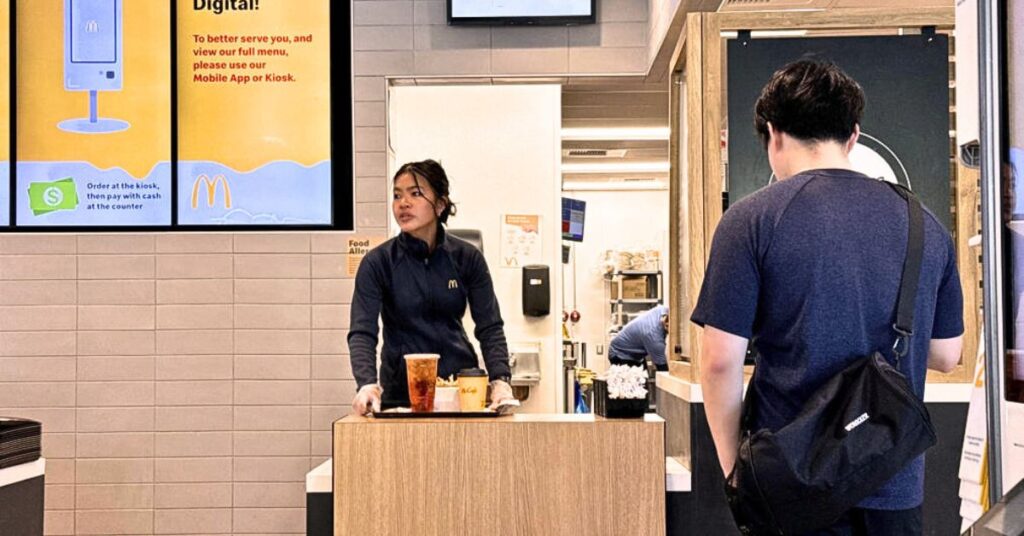
In general, the restaurant business faces extremely narrow profit margins. The largest expense is usually labor, which operators want to keep at about 30% of total expenses. In addition to sluggish consumer spending and commodity inflation, the higher minimum wage has presented operators with additional difficulties.
“What we can say without a doubt is that it’s really tough to operate any restaurant, any concept, any size, in California right now,” stated Sean Kennedy, executive vice president of public relations for the National Restaurant Association, a significant trade association that was against the wage increase.
Harper-Howie’s WEH Organization experienced a drop in same-store sales for 17 months following the implementation of the new minimum wage. In October, as McDonald’s approached the one-year anniversary of an E. Coli incident that caused company-wide sales to drop by double digits overnight, the trend eventually reversed. Despite reporting growth in same-store sales in the third quarter, the burger chain’s overall U.S. performance has struggled.
In order to oppose the California legislation, Harper-Howie and other McDonald’s franchisees founded the California Alliance of Family Owned Businesses. “For a long period of time, we were just bleeding money,” she stated.
According to Harper-Howie, her eateries passed on price hikes to patrons of less than 10%. It would be challenging to raise rates further in the face of a decline in restaurant business overall, especially among low-income patrons. Additionally, she said that other McDonald’s regular minimum-wage workers did not receive the same pay increase, making the food “unaffordable for many.”
In a similar vein, Harshraj Ghai has increased menu prices at his more than 200 Burger King, Taco Bell, and Popeyes outlets in California and Oregon by about 10% to 12%. According to Ghai, that was insufficient to counteract the salary rises.
Ghai has attempted to reduce worker hours by utilizing pre-cooked bacon for breakfast, installing automated batter mixers, and testing artificial intelligence to take drive-thru orders in order to further offset the increased costs.
“The cost and maintenance of of these technologies starts to become a little bit better than it would to pay somebody to actually do it,” he stated.
The pay increase was just one more quickly rising expense that franchisees had to deal with. For instance, Harper-Howie claimed that in addition to growing costs for beef and other essential ingredients, WEH’s insurance expenses have skyrocketed.
The flames in Los Angeles increased the strain on Harper-Howie’s company. The bigger impact came from the decreasing traffic as flames raged throughout the county, displacing many residents and frightening away tourists, even if one of her venues was temporarily shuttered.
Another problem has been Trump’s strict immigration policies.
Harper-Howie stated, “Our employees are mostly Latino, and they’re scared.” “That’s all of our hourly workers, our general managers, our shift managers, our department managers, and supervisors — and it’s our customers.”
Harper-Howie credited WEH’s decades in the McDonald’s system since her parents joined the company in the 1980s for the fact that she hasn’t yet had to close any restaurants.
Ghai, however, has had to permanently close several unproductive outlets. He stated that throughout the past year and a half, he has closed about ten stores in California, and he plans to close another twelve during the next year or two. Although closures are common in large-scale restaurant operations, he claimed that Ghai’s closures are significantly more severe than usual.
In contrast, Ghai only runs Taco Bell stores in Oregon, but he said that those establishments are “significantly more profitable” than those in California. While he hasn’t had to close any of his Taco Bell locations in Oregon, he has had to close at least three in California. Taco Bell’s high brand equity and value perception have helped it outperform the fast-food market as a whole over the past year.
Kennedy stated that some franchisors are opting to refranchise their California eateries in order to avoid the hassles of running the establishments themselves and instead receive franchising fees.
California continues to be a sought-after market for fast-food franchises despite increased labor expenses. The Bureau of Labor Statistics reports that between the first quarter of 2024 and the first quarter of 2025, the state added around 2,300 fast-food establishments. According to data by the California Fast Food Workers Union, the gain amounts to a 5% increase, surpassing both the 2% growth in the rest of the country and the 2% growth in California during the same period last year.
More from CNBC on their site